Remediation & Restoration
Water Remediation & Restoration: Why Immediate Action Matters
Water damage is rarely limited to what you can see. A small leak, spill, or roof issue can migrate through framing, insulation, and flooring, causing hidden deterioration and creating conditions for mold and poor indoor air quality. The longer water remains, the more extensive—and expensive—the damage becomes.
Why immediate action matters
Limits structural damage: Standing or trapped water weakens wood, drywall, and fasteners. Prompt drying and moisture management can prevent rot, warping, and compromised structural integrity.
Reduces mold risk: Mold can begin growing within 24–48 hours in damp conditions. Early removal of moisture and contaminated materials reduces the likelihood
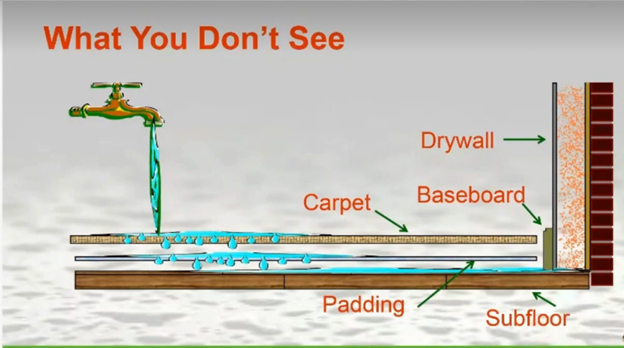
What You Don’t See: The True Path of Water
The image you see illustrates a key truth: water doesn’t stay where it starts.
Even a small source—like a leaking faucet or appliance—can travel:
Beneath carpet and padding
Into the subfloor
Behind baseboards and drywall
Laterally across rooms, following the path of least resistance
By the time water becomes visible, it has often already spread well beyond the original source. This hidden migration is what leads to:
Warped flooring
Compromised drywall
Mold growth within 24–72 hours
Structural deterioration if left untreated
Why Immediate Remediation Is Essential
Time is the most critical factor in water damage.
Within hours:
Water begins soaking into porous materials
Finishes and adhesives weaken
Within 24–48 hours:
Mold spores can begin to develop
Odors set in
Materials like carpet padding become unsalvageable
Beyond 72 hours:
Structural drying becomes more complex
Restoration costs increase significantly
Potential health risks emerge
Prompt professional remediation minimizes damage, reduces costs, and preserves as much of the home as possible.
The Power of a Coordinated Team
Successful water restoration is not just about drying a space—it’s a coordinated effort between key professionals. Without coordination, delays can lead to unnecessary demolition, denied claims, or prolonged disruption. When these parties operate in alignment:
Damage is contained more quickly
Documentation is accurate and complete
Insurance claims are smoother and faster
Restoration timelines are shortened
Overall costs are reduced
1. The Remediation Specialist
A licensed remediation team:
Assesses moisture levels (including hidden areas)
Extracts standing water
Uses commercial-grade drying equipment
Prevents mold growth
Documents the process thoroughly
They are your frontline response and technical experts in mitigation.
2. The Insurance Agent & Adjuster
Insurance professionals play a vital role in:
Determining coverage and scope
Reviewing documentation and damage reports
Approving necessary remediation and repairs
Ensuring the claim process moves efficiently
Clear, timely communication between the remediation team and adjuster is essential to avoid delays or coverage gaps.
3. The Property Manager or Homeowner
Whether you’re a full-time resident or managing a second home, your role includes:
Acting quickly at the first sign of water intrusion
Coordinating access for vendors and inspectors
Communicating with insurance and service providers
Making informed decisions about repairs and restoration
For second homeowners or vacant properties, having a trusted property management team ensures issues are caught early—often before they escalate.
A Proactive Approach Protects Everything
Water damage is one of the most common—and most preventable—threats to a home. Regular inspections, proper maintenance, and having a trusted response team in place can make all the difference.
At Sisters Country Property Management, we take a proactive, hands-on approach to home oversight—ensuring that potential issues are identified early and that, when needed, the right professionals are engaged immediately and effectively.